
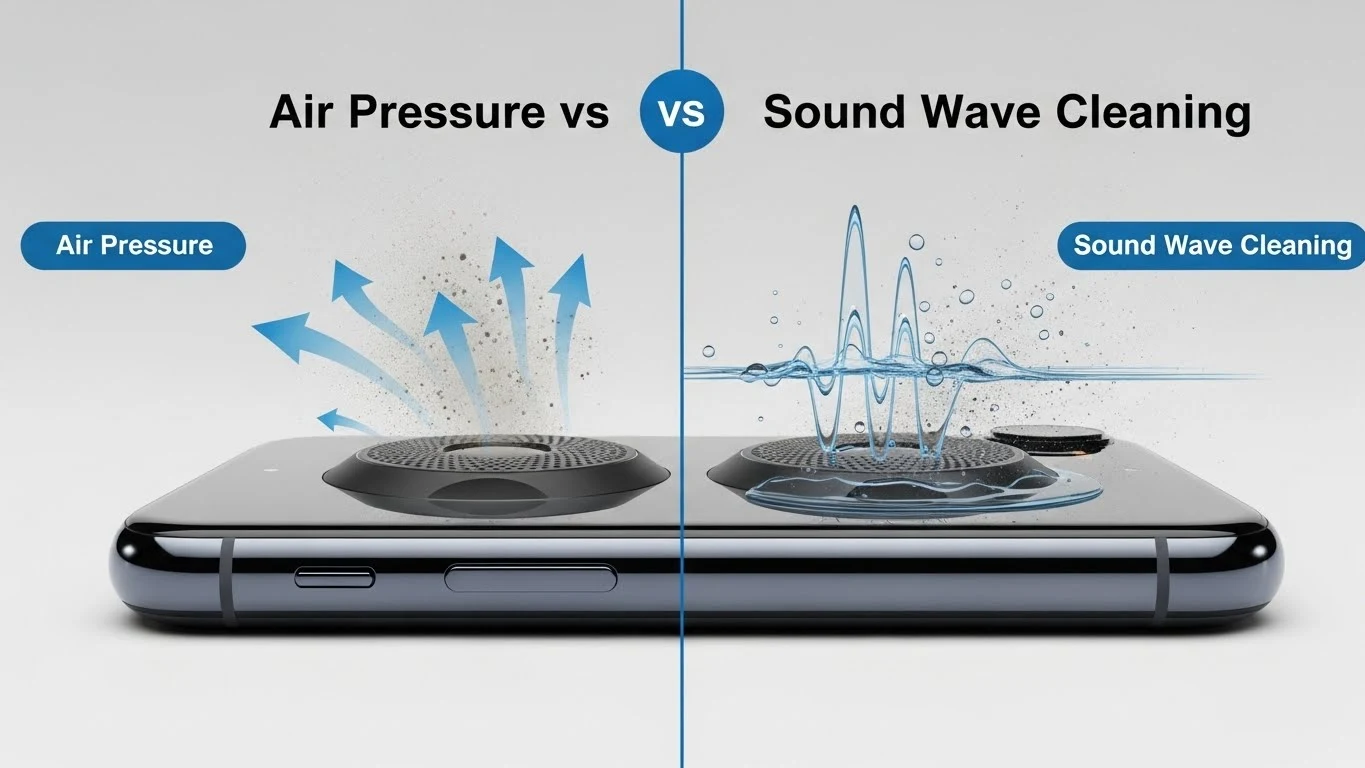
Air Pressure vs Sound Wave Cleaning: What Actually Works for Phone Speakers?
If you’ve ever looked up how to clean your phone speaker, you’ve probably seen two common methods: using air pressure and using sound waves. Some people swear by compressed air, while others say sound vibrations are safer.
I’ve tried both methods myself on different phones. Some results were good, some were honestly scary. In this guide, I’ll break down what really works, what doesn’t, and what you should actually trust — without any technical drama. Let’s talk real experience.
Why Phone Speakers Get Dirty in the First Place
Before comparing methods, it’s important to understand what’s inside your speaker. Phone speakers are tiny. Really tiny. Here’s what builds up in your speakers over time:
- Dust from your pocket
- Lint and fuzz from your clothes
- Sweat or a bit of moisture
- Damp air on humid days
- Tiny water drops from rain or spills
All that gunk blocks the sound, and you might start to notice:
- It’s way too quiet
- Everything sounds muffled
- You hear crackling or static
- There’s a weird echo
- The phone vibrates, but no sound comes out
So, how do people usually try to clean this out? Let’s take a look.
What Is Air Pressure Cleaning?
Basically, it’s using a quick, focused blast of air to try to force dust or water out of the speaker grill. Common ways people use air pressure:
- Compressed air cans
- Air blowers
- Mouth blowing (yes, people do this)
- Vacuum reverse mode
The idea sounds logical: “Blow the dirt out.” But real life isn’t that simple.
My Experience With Air Pressure Cleaning
I’ll be honest — air pressure cleaning sometimes works, but it’s risky. Here’s what I noticed:
Pros of Air Pressure Cleaning
- Can remove loose surface dust
- Fast and easy
- No software needed
Cons (This Is the Real Problem)
- Pushes dirt deeper inside
- Can force water further into the speaker
- May damage the speaker membrane
- Risky for waterproof phones
- One wrong angle = big problem
I once used compressed air on a slightly wet phone speaker. Result? The sound got worse. The moisture went deeper. That’s when I stopped trusting air pressure.
What Is Sound Wave Cleaning?
Sound wave cleaning uses controlled audio frequencies to vibrate the speaker. Instead of pushing air into the speaker, it makes the speaker:
- Shake gently
- Break the surface tension of water
- Push debris out naturally
No physical contact. No pressure. This is the same concept used in ultrasonic cleaning — just adapted safely for phone speakers.
My Experience With Sound Wave Cleaning
This method surprised me — in a good way. I first tried it when my phone speaker sounded muffled after the rain. I didn’t want to risk air pressure again, so I used a sound-based speaker cleaning tool.
What happened:
- Water droplets visibly came out
- Sound slowly became clearer
- No damage
- No overheating
- No risk feeling
That’s when I realized why sound waves make more sense.
Air Pressure vs Sound Wave Cleaning (Real Comparison)
Let’s compare both methods honestly:
| Factor | Air Pressure | Sound Wave Cleaning |
| Safety | Risky | Very safe |
| Water removal | Can push water inside | Pushes water out |
| Dust removal | Surface level only | Deep mesh cleaning |
| Speaker damage risk | High | Almost none |
| Control | Hard to control | Fully controlled |
| Repeat use | Not recommended | Safe weekly use |
| Works on all phones | No | Yes |
From real use, sound wave cleaning wins for daily and preventive cleaning.
Why Air Pressure Can Be Dangerous
Most people are unaware that phone speakers are designed to disperse air outward, not inward.
When you blow air:
- You force pressure against the membrane
- You disturb internal seals
- You risk tearing the mesh
Especially on water-resistant phones, air pressure can:
- Breakwater seals
- Push moisture into sensitive areas
That’s why many repair technicians now avoid air pressure.
Why Sound Waves Are Safer
Sound wave cleaning works with the speaker, not against it. Here’s why it’s safer:
- Uses natural speaker movement
- No foreign pressure
- Frequencies are controlled
- No physical stress on components
Low frequencies shake dirt. Mid frequencies break water tension. High frequencies vibrate micro-particles out. It’s gentle but effective.
When Air Pressure Might Be Okay (Rare Cases)
To be fair, air pressure isn’t always bad. It can be okay when:
- The speaker is completely dry
- Dust is clearly visible on the surface
- Very light air is used
- Angle is correct (never straight in)
But even then, it’s not my first choice.
When Sound Wave Cleaning Is the Better Choice
Sound wave cleaning is ideal when:
- The speaker got wet
- Sound is muffled
- Volume suddenly dropped
- Crackling or echo appears
- You want safe, regular cleaning
That’s why I personally rely on Speaker Cleaner — it uses sound waves instead of pressure, and I don’t have to worry about damaging my phone.
Common Mistakes People Make
I’ve seen people ruin speakers by doing this:
- Using hair dryers
- Blowing air too close
- Shaking the phone aggressively
- Using random loud sounds
- Cleaning while the phone is charging
All risky.
What I Do Now (My Simple Routine)
Here’s my current routine:
- Once a week, sound wave cleaning
- After rain or sweat exposure, clean immediately
- No air pressure
- No tools
- No heat
Since following this, I haven’t faced muffled sound issues again.
Which Method Should You Trust?
Let me say this clearly:
- Air pressure is a gamble
- Sound wave cleaning is controlled
If you care about your phone speaker long-term, sound wave cleaning is the smarter choice.
Air pressure might fix things quickly — or make them worse. Sound waves take a minute longer — but they don’t damage anything.
Final Verdict (From Real Use)
If someone asks me:
- “Air pressure or sound wave cleaning?”
My answer is simple:
- Sound wave cleaning. Every time.
It’s safer, smarter, and designed for modern phone speakers. Your phone speaker is delicate. Treat it that way.