
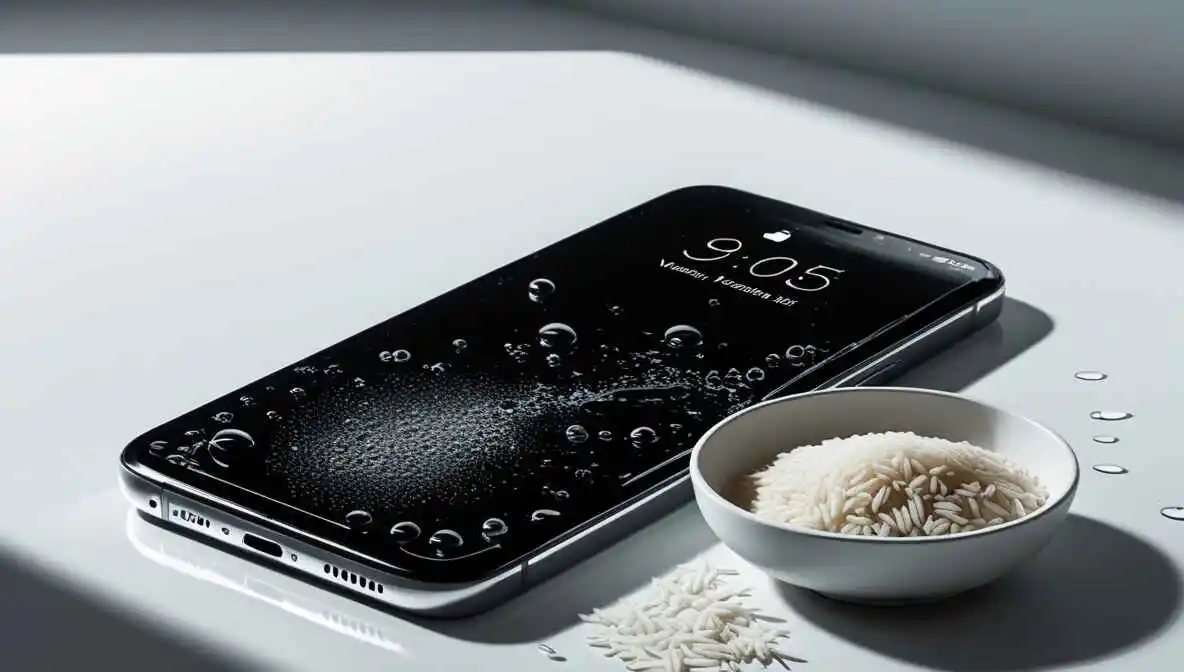
Phone Repair with Rice: Myth or Reality?
Smartphones are a major part of our lives, and accidents that lead to accidental water damage are among the primary issues that users face. To this end, accidents caused by water damage are the most frequent problem users experience. A man can drop his phone in a sink, spill a beverage on it, or get caught in the rain, but, regardless, moisture can do severe damage to delicate electronic parts.
The method of application using rice has been one of the most widespread home remedies over the years. As the story goes, wet phones can be saved by putting them in uncooked rice to wring out the water in the phone.
Nevertheless, does this method work? Is it a myth that will not die? This paper will detail how the rice method came to be and will analyze scientific research and experts’ reviews on the same, outline the dangers of the rice method, and provide a superior method for rescuing a phone sunk in water.
The Origins of the Rice Method
The concept of rice as an aid in repairing wet electronic devices is probably due to the natural property of rice to absorb water. Rice has also been used in most cultures to preserve salt or spices by having a few grains in storage containers so that they would not get wet. This homemade trick slowly spread into the field of electronics, and people believed that rice would also remove internal moisture in electronics.
The myth was magnified by the use of the internet. YouTube tutorials, social media posts, and tech forums all made the rice technique a reliable recommendation to anyone with a wet phone. It goes without saying that it is popular: rice is affordable, can be found in nearly any single home, and does not demand technical skill.
What Happens When Water Enters a Phone?
It is more effective to ask how the problem of water damage is so grave by examining the construction of smartphones.
Internal Vulnerabilities
- Motherboard and circuits: The Circuit board of the phone is saturated with fragile electrical circuits. A slight drop in water will bring short-circuiting.
- Battery: Lithium-ion batteries are prone to being destroyed by moisture or damaged forever.
- Display and touchscreen: Water may creep into the layers of the display, making it turn discolored, or even become insensitive to touch or shut down forever.
- Speakers and microphones: These are particularly prone to damage as the sound produced by them is usually muffled or distorted from the original.
- Port charges and connectors: Metal connectors, even with a small amount of moisture, cannot be charged or data exchanged.
The Role of Corrosion
The threat of a short circuit is not the sole cause of water damage; however, corrosion due to it may happen over a certain period of time. The corrosion occurs when there is a reaction between water (particularly salt or dirty water) and metals within the phone. A phone might seem to function properly even when it has been dry cleaned; however, corrosion could be concealed and lead to its breaking down a few days/weeks after.
The Rice Method Explained
The rice technique presupposes the placement of a moist phone inside a bag or a bowl of uncooked rice. Rice will serve to draw water out of the air and the device itself, thus the theory.
This would appear to be logical at first. Rice does take on the water of the environment when it is stored, and that is why, occasionally, it is kept in salt containers. However, the question is, is rice strong enough to wring water out of a smartphone inside a well-sealed container in a safe period?
Scientific Studies on Rice vs. Other Drying Methods
A series of experiments has been performed in order to test the rice method ,and the positive outcome is that rice is one of the least effective.
Gazelle Experiment (2014)
Gazelle, an established electronic reseller, attempted various drying techniques by placing devices in water and manning in various substances, such as rice, silica gel, oatmeal, or outside. After 24 hours:
- The greatest moisture was removed by the use of the silica gel.
- Rice had a very marginal impact, as it only improved slightly over not covering the phone at all in the open air.
Professional and TekDry Drying Systems
The myth about rice has been tested by TekDry, a firm that focuses on selling water-removal machines. In their research they conducted, they found out that rice not only offers no protection but also creates an illusion of protection to those using it. Controlled heat and vacuum machines were far more reliable and much faster in online systems with the use of professionals.
Consumer Reports (2015)
Rice was also compared with others in Consumer Reports. Their conclusion: rice did not hasten the drying process and was a complete waste when compared to silica gel packets.
The Risks of Using Rice for Phone Repair
Rice may be harmless, but the dependence on it will only worsen the situation at hand.
Time Wasted
Water damage is a matter of time. Rice is known to need time to work (24-48 hours); thus, corrosion sets in, complicating or even prohibiting the repair process.
Dust and Residue
Raw rice has the potential to leave behind rice particles as well as dust. They may get stuck in ports used for charging, the port used to insert headphones, or speaker grills, leading to further issues.
False Hope
A good number of people will be certain that the problem is fixed just because their phone has switched on following the rice technique. As a matter of fact, the moisture could remain trapped and corrode internal parts.
Permanent Damage
By not seeking professional repair immediately, a user lowers the possibility of saving the phone completely.
Better Alternatives to the Rice Method
When your cell phone touches water, use these steps that have been tried and proven to be more effective than rice:
Immediate Actions
- Disabling and shutting down: Deters internet short-circuiting.
- Turn the phone off: Use your fingers to turn off the phone.
- Wipe down the outside: Dry up evident water with a microfiber cloth.
- Heat: Do not turn on a hairdryer or oven since any extra heat may distort parts.
Effective Drying Materials
- Silica gel packets: These are much better than silica gel at absorbing moisture. They come with lots of electronics and shoe boxes.
- Desiccant pouches: Singular packaging deals with electronics and is far faster than rice.
- Professional services: TekDry and Redux are organizations that execute the procedure of safely extracting moisture through vacuum chambers.
Why the Rice Myth Persists
Although disproved several times, the rice method is not bad. Some of its reasons are:
- Accessibility: Rice is found in nearly every home.
- Cost: It appears to be a free and easy answer.
- Anecdotal success: Some users claim that their phones functioned after being put in rice, yet in almost all instances, the phone would have dried naturally within the same duration.
- Social media and word of mouth, Viral posts keep alive the idea, strengthening the myth.
Expert Opinions
- It is not possible to use rice in both Apple and Samsung. They recommend, however, that it be allowed to dry in a well-ventilated area or in silica gel.
- Rice always does more harm than good; case practitioners are always advised by repair technicians to ensure it does not go untreated.
Long-Term Effects of Water Damage
Although a phone may seem to be functioning properly once it has been dried, it has been claimed that in most cases, water has caused damage in unknown areas:
- Reduced life or premature failures.
- Due to corrosion, charging ports may become defective.
- Image issues: Flashing, color distortions, or dead touch.
- Aural problems: = Muffled hearing of speakers and microphones.
These are the problems to point out why rice is not a suitable solution.
Conclusion
One of the well-known DIY tricks to save a phone that is damaged by water is the so-called phone in rice, but it is obvious that this is a myth based on scientific research and the opinions of experts. Although it can absorb moisture, it reacts too slowly to ensure the safety of a fragile electronic. Better, it can leave certain traces and postpone the actual solutions.
To have the best chance of saving your phone:
- Power it off immediately.
- Take silica gel or any other specialized drying equipment.
- Reform professional help.
Sooner, rice may even make you think that you are doing something, but not your smartphone. In this instance, rice is not more important than knowledge, and how something is moving to fix water damage.