
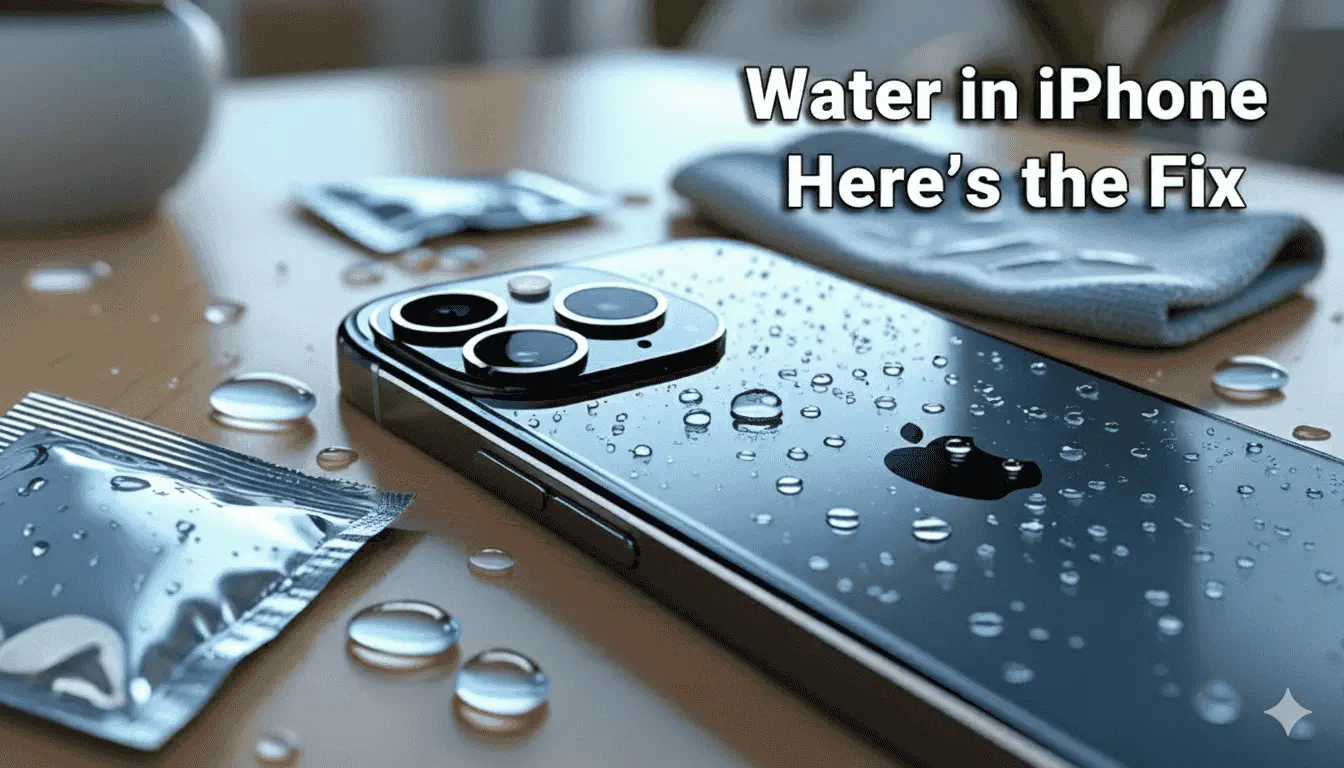
How to Get Water Out of an iPhone Camera (Step-by-Step Guide)
One of the best bets that an iPhone user finds is accidentally getting water or some moisture inside the camera lens or any other place. Leaking water in the iPhone camera can produce blurred photos, a foggy iPhone camera, or may leave it permanently damaged unless addressed.
Here are a few tips on how to drain all the water out of your iPhone camera, what to avoid, and how to prevent water problems with your phone in the future. In this guide, we will be covering how to empty all the water that is in your iPhone camera without damaging the phone.
Why Does Water Get Inside an iPhone Camera?
Although the iPhone 7 and other new models (iPhone 7 and later) now have water resistance (IP67/IP68 rating), they are not waterproof. This means:
- When exposed to excessive submergence, the water may enter inside.
- Condensation inside the lens could happen due to high humidity, exposure to sweat, or rain.
- Seals that are old and have cracks are challenging to prevent water entry.
Signs That Your iPhone Camera Has Water Inside
You may notice:
- Poor quality of camera images.
- Condensation or droplets of water as seen through the lens.
- Small black or white areas in images.
- Freezing of the camera or its malfunctioning.
Step-by-Step Guide: How to Get Water Out of an iPhone Camera
Turn Off Your iPhone Features Right Now
- Recharge your iPhone battery to prevent it from running out.
- Do not charge it while it’s wet.
Remove Case and Accessories
- To open the iPhone, take out the phone case, the SIM tray, and any other accessories.
- This facilitates ventilation and accelerates the drying of wood.
Wipe the Exterior
- Wipe the camera with a soft fiber cloth to clean the lens and the outside.
- Do not be too hard, as this may force the moisture even deeper in.
Use the Gravity Method
- Lay your iPhone face up (lens of the camera turned down).
- Large droplets can be removed by gravity acting on small droplets over a period of time.
Air-Dry in a Ventilated Space
- Put your iPhone somewhere warm (never hot).
- Keep it near (yet not on) a fan or open window to establish better air circulation.
Best Method: Use Silica Gel Packets
- Put your iPhone in a container that has silica gel.
- Silica is more effective in drying up than rice.
- Leave it for at least 24-48 hours.
Avoid the Rice Myth
- Most people suggest leaving a wet iPhone in rice.
- Though it has the same dampening ability as silica gel, rice is not as efficient as silica gel and can leave dust in the phone.
Try Low Heat Carefully
- However, one should apply a hairdryer or heat gun at the lowest possible level.
- The minimum distance between the iPhone and the device should be 30 cm.
- Hence, it should not be overheated by excessive heat, which burns internal parts.
Cleaner Water Ejection Tool (Speaker Cleaner)
- There are internet tools that push water out of iPhone speakers when certain sound waves are played.
- This does not obviously clean the camera, but it aids in the overall removal of the trapped moisture in the camera.
Seek Professional Repair
- When no fog or droplets have disappeared after 48 hours, go to an Apple Store or authorized repair centre.
- They can obtain the lens and dry it without damage to their warranties.
What NOT to Do When iPhone Camera Gets Wet
- Do not use your iPhone violently.
- It cannot be kept a long time under the sun.
- Do not place it in an oven or in a microwave (hazardous!).
- These should not be high-heat hairdryers/heaters.
How to Prevent Water Damage in the iPhone Camera
- A waterproof case is recommended when you frequently find yourself close to pools, beaches, or rain.
- Do not put your iPhone in steam (bathrooms, saunas).
- It should also be checked frequently for back glass cracks or the lens area.
- Keep silica gel packets in the home emergency kit.
Check for Condensation Using a Flashlight
- Check by shining a flashlight over the iPhone camera lens, and make sure that the lens shows the bright part of the image.
- In case of fogging or droplets, it is a guarantee of entrained moisture.
- This will assist you in making a decision to continue drying it at home or to repair it.
Use a Vacuum Cleaner (Safe Distance)
- A handheld vacuum (applied to electronic tools) of small size can occasionally aid in pulling out the water.
- Ensure that you maintain a safe distance that will not break seals or parts.
Don’t Try to Open the iPhone Yourself
- It seems that a lot of individuals believe that the iPhone can be opened and that its lens can be cleaned.
- This damages the warranty and jeopardizes the integrity of waterproof seals.
- Disassembly should always be done by an approved technician.
Moisture in Front Camera vs. Rear Camera
- Water at the back of the camera influences the quality of the picture the most.
- The front camera should have water that can be cleared quickly, as it is smaller.
- The drying time can vary with the lens being affected.
Monitor iPhone for Other Water Damage Signs
- The auditor’s muffled sound.
- Test touchscreen response time.
- Search for warning signs, such as Liquid in the Lightning portfolio.
- The water damage is sometimes just the tip of the iceberg, as the part covered by the camera is foggy.
FAQs About iPhone Camera Water Damage
Final Thoughts
Having water in your iPhone’s camera is actually a painful experience, yet there are a number of things that can be done to save your phone. Remember to:
- Turn it off immediately.
- Blot it manually with silica gel packets.
- Do not take shortcuts such as high heat and microwaves.
- See a specialist in case the problem does not subside.
Water in the iPhone camera can be effectively dried with the right method, and long-term damage can be avoided.